
Everything You Didn't Know About Knitwear
KNITPEDIA
Why Do Knit Clothes Get Pills?
How Pills Form

Knits develop pilling because the fibersThey become entangled due to friction and rise to the surface, where they solidifyThis is the reason.
Pilling is particularly likely to occur under the following conditions.
The fibers are long and thin→ Prone to slipping due to friction (wool, cashmere, etc.)
Contains synthetic fibers→ Because they are resistant to friction, the fibers don't break but instead curl up and form pills (acrylic, polyester, etc.)
Highly Mobile Parts→ Cuffs, underarms, sides, areas where the bag rubs against the body, etc.
Pills tend to form due to "friction, heat, and force."
How Prone to Pilling Different Knit Fabrics Are

Acrylic blend: It's inexpensive, but pilling is noticeable.
Polyester blend: Durable, but prone to pilling
Cashmere: It is very soft and prone to pilling, but with proper care, it will last a long time.
100% Wool: It does develop mats, but they come out easily when brushed
Woven Fabrics vs. Knitwear: Which Is More Prone to Pilling?

To put it simply, knit fabrics are more prone to pilling than woven fabrics.
1. Differences in Structure
Knitwear
Because it is knitted in a looped pattern, the yarn tends to shift easily, causing the surface to become fuzzy.
When lint gets tangled due to friction, it turns into a ball of lint.
Woven Fabrics
The warp and weft threads intersect at right angles, making it easy to secure the threads.
It is less likely to develop surface fuzz and is resistant to pilling.
2. Properties of the Thread Used
To give knitwear softness and stretch,Thin, pilling-prone yarns and yarns containing synthetic fibersis commonly used.
To give woven fabrics body and strength, they are relativelyYarn with tight twist and minimal fuzzThere are many.
3. Friction While Wearing
Because knitwear fits snugly against the body and moves with you, it’s prone to friction in areas such as the underarms and sleeves.
Although woven fabrics can restrict movement, the frequency and intensity of friction are relatively low.
Summary
Prone to Pilling
Knitwear > Woven FabricsPilling is particularly noticeable on knitwear made of wool or acrylic blends.
In the case of woven fabrics that are prone to pilling due to a raised-pile finish (such as flannel), pilling may occur, but generally not to the same extent as with knits.
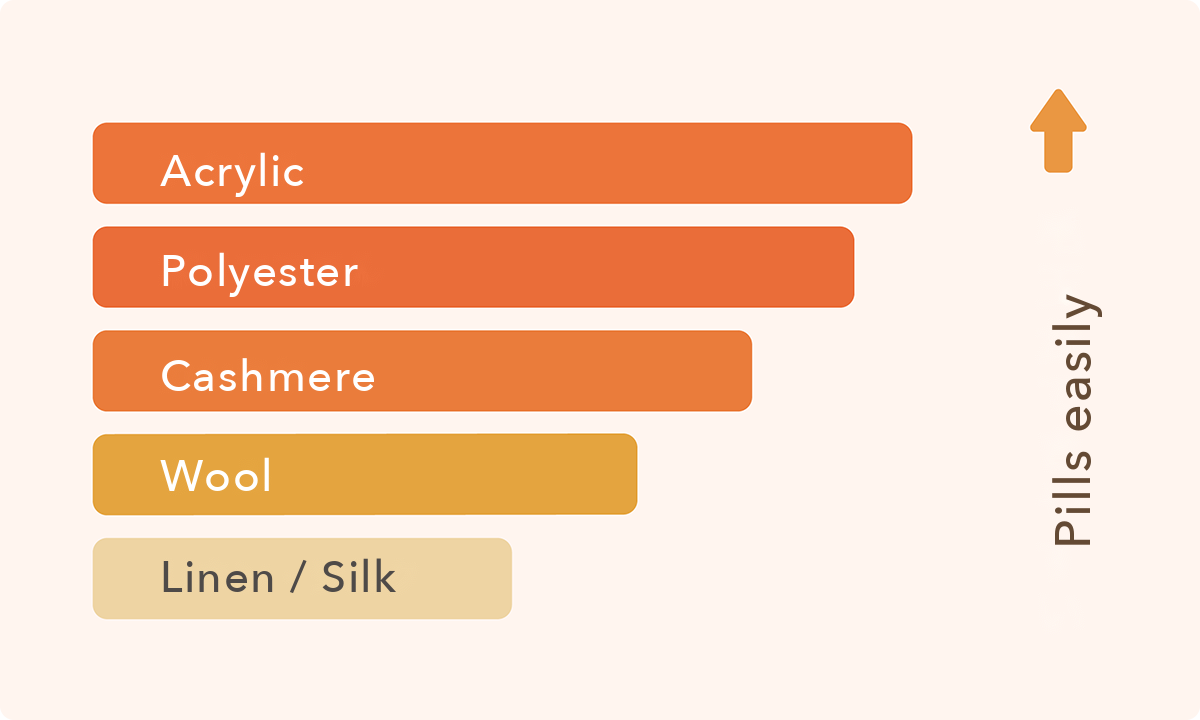
Types of Knitwear Prone to Pilling, Ranked (Approximate)
The ball of yarnVery easy to make (Large)
Acrylic Knit
→ Synthetic fibers are so strong that they don't break, so they curl up due to friction and leave behind pilling. This is common in inexpensive sweaters.Cashmere Sweater
→ Because the fibers are very fine and soft, they easily become fuzzy and develop pills due to friction. However, they are easy to care for with brushing.Wool and Acrylic Blend
→ The combination of wool's tendency to fuzz and acrylic's tendency to leave fibers behind results in a lot of pilling.
The ball of yarnRelatively easy to make (Medium)
100% Wool Knit (Merino Wool, etc.)
→ While pilling does occur, wool fibers break easily, so they may fall off naturally, leaving fewer pilling residues than acrylic does.Knitwear Made from Animal Hairs, Such as Angora, Mohair, and Alpaca
→ The long, soft, fluffy fibers tend to get tangled and form mats. While it looks luxurious, it’s hard to avoid matting.
The ball of yarnHard to do (Small)
Cotton Knit
→ Since it’s made of short fibers, it does pill to some extent, but less so than wool or acrylic. The pills come off easily in the wash.Linen-Silk Blend Knit
→ It has a smooth surface and is resistant to pilling. It is also relatively resistant to friction.Nylon-Blend (Small Amount) Knit
→ Nylon is strong, but adding a small amount can improve durability and may also reduce pilling.
Summary (In Order of Likelihood of Pilling)
Acrylic > Cashmere > Wool/Acrylic Blend > 100% Wool > Angora/Mohair > Cotton > Linen/Silk Blend
There are also differences depending on the knitting method.

Loose-knit (coarse knit)→ Because the yarn is thick and creates a lot of friction, it tends to pill easily.
High-gauge (fine knit)→ Because the yarn is tightly packed, it is less likely to shed and less prone to pilling.
Pilling Prone Matrix (Fabric × Knitting Method)
How Pills Form
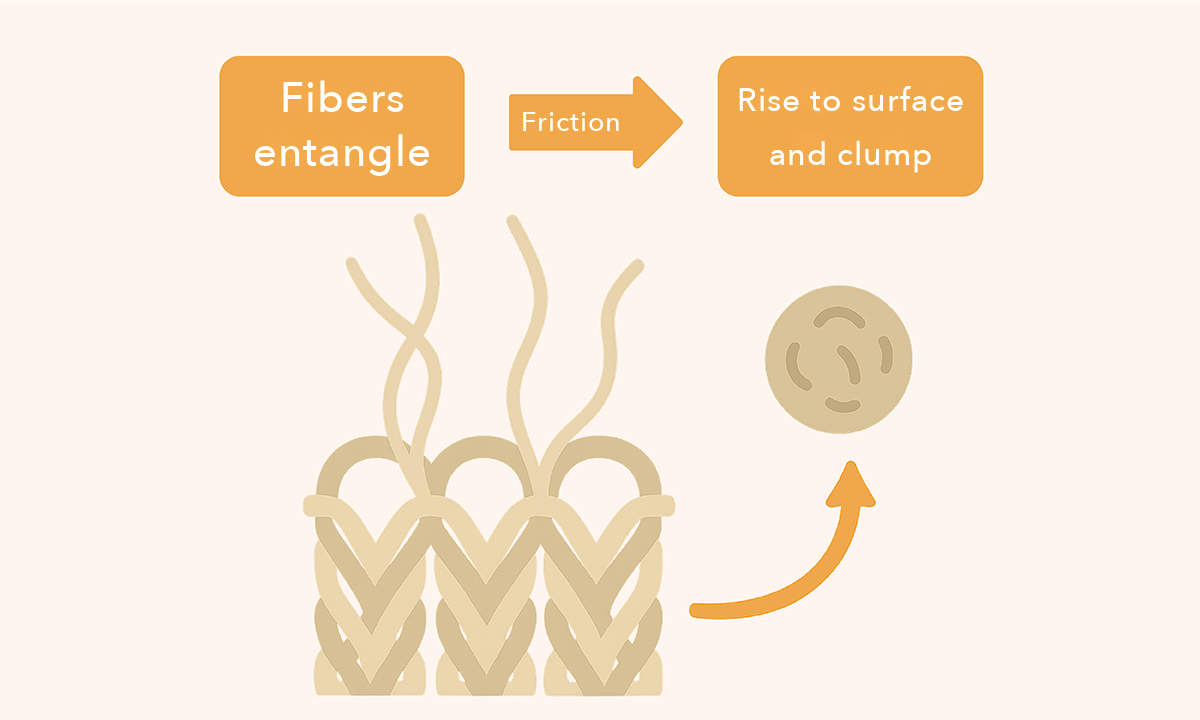
Knits develop pilling because the fibersThey become entangled due to friction and rise to the surface, where they solidifyThis is the reason.
Pilling is particularly likely to occur under the following conditions.
The fibers are long and thin→ Prone to slipping due to friction (wool, cashmere, etc.)
Contains synthetic fibers→ Because they are resistant to friction, the fibers don't break but instead curl up and form pills (acrylic, polyester, etc.)
Highly Mobile Parts→ Cuffs, underarms, sides, areas where the bag rubs against the body, etc.
Pills are more likely to form due to "friction, heat, and force."
Types of Knitwear Prone to Pilling, Ranked (Approximate)
The ball of yarnVery easy to make (Large)
Acrylic Knit
→ Synthetic fibers are so strong that they don't break, so they curl up due to friction and leave behind pilling. This is common in inexpensive sweaters.Cashmere Sweater
→ Because the fibers are very fine and soft, they easily become fuzzy and develop pills due to friction. However, they are easy to care for with brushing.Wool and Acrylic Blend
→ The combination of wool's tendency to fuzz and acrylic's tendency to leave fibers behind results in a lot of pilling.
The ball of yarnRelatively easy to make (Medium)
100% Wool Knit (Merino Wool, etc.)
→ While pilling does occur, wool fibers break easily, so they may fall off naturally, leaving fewer pilling residues than acrylic does.Knitwear Made from Animal Hairs, Such as Angora, Mohair, and Alpaca
→ The long, soft, fluffy fibers tend to get tangled and form mats. While it looks luxurious, it’s hard to avoid matting.
The ball of yarnHard to do (Small)
Cotton Knit
→ Since it’s made of short fibers, it does pill to some extent, but less so than wool or acrylic. The pills come off easily in the wash.Linen-Silk Blend Knit
→ It has a smooth surface and is resistant to pilling. It is also relatively resistant to friction.Nylon-Blend (Small Amount) Knit
→ Nylon is strong, but adding a small amount can improve durability and may also reduce pilling.
Summary (In Order of Likelihood of Pilling)
Acrylic > Cashmere > Wool/Acrylic Blend > 100% Wool > Angora/Mohair > Cotton > Linen/Silk Blend
Knitwear and Woven Fabrics: Which Is More Prone to Pilling?

To put it simply, knit fabrics are more prone to pilling than woven fabrics.
1. Differences in Structure
Knitwear
Because it is knitted in a looped pattern, the yarn tends to shift easily, causing the surface to become fuzzy.
When lint gets tangled due to friction, it turns into a ball of lint.
Woven Fabrics
The warp and weft threads intersect at right angles, making it easy to secure the threads.
It is less likely to develop surface fuzz and is resistant to pilling.
2. Properties of the Thread Used
To give knitwear softness and stretch,Thin, pilling-prone yarns and yarns containing synthetic fibersis commonly used.
To give woven fabrics body and strength, they are relativelyYarn with tight twist and minimal fuzzThere are many.
3. Friction While Wearing
Because knitwear fits snugly against the body and moves with you, it’s prone to friction in areas such as the underarms and sleeves.
Although woven fabrics can restrict movement, the frequency and intensity of friction are relatively low.
Summary
Prone to Pilling
Knitwear > Woven FabricsPilling is particularly noticeable on knitwear made of wool or acrylic blends.
In the case of woven fabrics that are prone to pilling due to a raised-pile finish (such as flannel), pilling may occur, but generally not to the same extent as with knits.
Which is more prone to pilling: low-gauge or high-gauge knitwear?
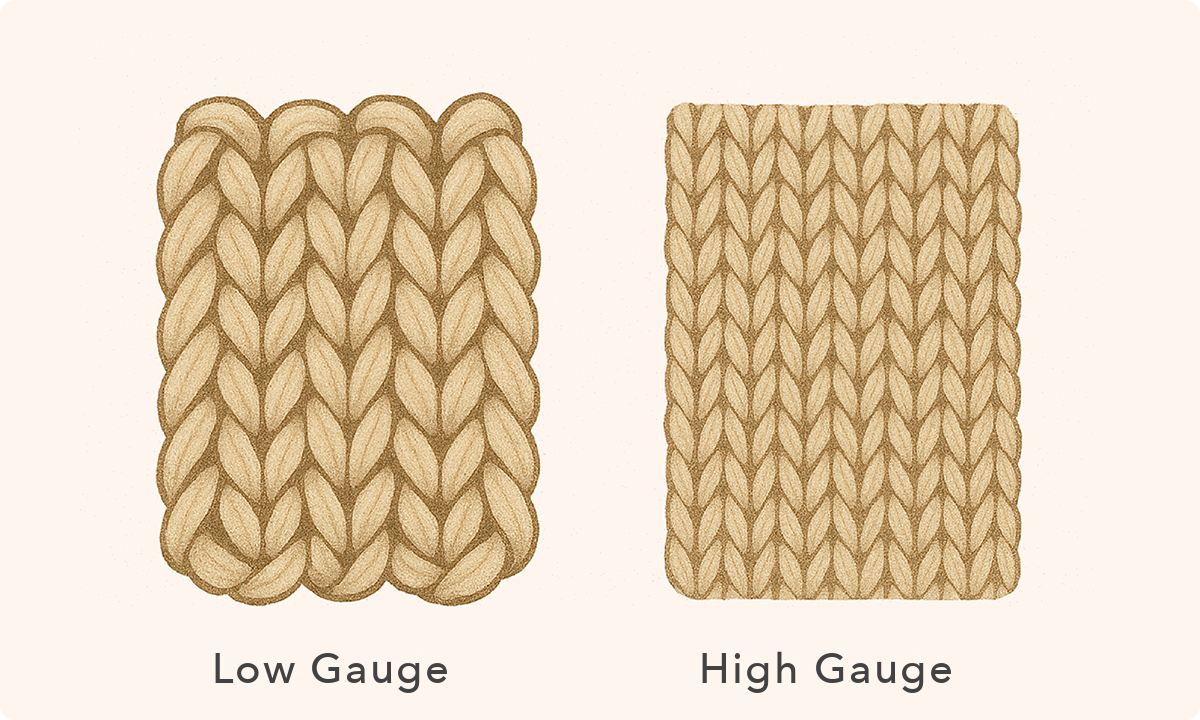
Loose-knit (coarse knit)→ Because the yarn is thick and creates a lot of friction, it tends to pill easily.
High-gauge (fine knit)→ Because the yarn is tightly packed, it is less likely to shed and less prone to pilling.
Pilling Prone Matrix (Fabric × Knitting Method)
This table shows,This chart shows how prone a fabric is to pilling based on the combination of material and knitting method (gauge). The more stars there are, the more likely the fabric is to pill.This refers to...
How should we interpret this?
The properties of the material are the primary determining factor
Acrylic and polyester fibers are strong and resistant to tearing, soClumps of loose hair tend to form into ballsTrends.
Linen and silk have a smooth surface, andResistant to pilling and has few lint balls。The stitch pattern (gauge) may vary by 1 to 2 levels
Loose-knit (coarse)…The yarn is thick, making it easier to work with but also increasing friction → This makes it more prone to pilling.
High Gauge (Fine)…The dense weave prevents lint from coming to the surface → This helps prevent pilling.Interactions in Blended Fabrics
"Wool + Acrylic," for example,Fabrics That Pile Up × Fabrics That Are Prone to LintThis combination tends to cause more pilling.
Practical Tips (How to Choose)
I want to reduce pilling in my everyday clothes
Linen-silk blend, or cottonHigh GaugeI recommend this.I want to reduce the risk while maintaining a light, fluffy texture
Cashmere isHigh GaugeSelect, and after wearing it,BrushingSo, let's focus on prevention.When Choosing Acrylic or Polyester Products
If possibleTending toward high gauge, andKnit fabric with a smooth surfaceChoosing this will make a lasting impression.
Basic Grooming Tips (How to Prevent Pilling)
Brush After Wearing: Flattens the nap and removes the “seeds” of lint.
Wash on a gentle cycle using a laundry net: Turn inside out, use a mild detergent, and keep the spin cycle short,Flat-DryingTo prevent it from losing its shape.
Avoiding Conflict: Be careful of areas prone to chafing, such as the bag straps and under the arms.
Key Points
The actual formation of lint balls is,Yarn twist, yarn count, finish (brushing, washable treatment), blend ratio, wearing conditionsIt fluctuates back and forth.
Even if the material names are the same, there can be significant differences in quality, soTexture and Surface Density When Trying OnPlease check this as well.
If you'd like to learn more,
The content of this article has been independently edited and organized using research and AI. For those who wish to learn more about the properties of textiles and clothing care in greater depth, we recommend consulting a specialized institution such asJapan Clothing Management Association (General Incorporated Association)Well,
Text widely used in the industryBasic Knowledge of Textile Products (Newly Revised Edition), 3-Volume SetThis may be helpful.
This resource provides a systematic overview of fiber structure, material properties, and handling methods.
Glossary | Page (Part 1) | Contents | |
|---|---|---|---|
Physical Factors Affecting Texture | Bending deformation, shear deformation, tensile deformation, compressive deformation, surface friction | p.86-p.87 | Methods for Measuring Textural Characteristics |
Mechanical Properties of Fabrics and Characteristics of Fibers | A Comparison of Woven and Knitted Fabrics | p.87-p.90 | Practical Performance of Knitted Fabrics Compared to Woven Fabrics |
/ Tag
Return to KNITPEDIA Home